Data & development
Python, data preparation and data systems. Turning messy inputs into usable foundations.
Ahmad Hazwan bin Abinan
I bring public administration and data science together to build practical tools, understand complex problems, and support better decisions.

I currently serve the Sabah State Government. My MSc studies in Data Science at the University of Exeter connect that public service experience with hands-on work in analytics, machine learning and AI.
I am interested in what happens beyond a promising prototype: how a system performs in a real setting, how people use it, and how it can be operated responsibly.


PUBLIC-SERVICE EXPERIENCE


Python, data preparation and data systems. Turning messy inputs into usable foundations.
Model development, evaluation and site calibration, with a focus on real-world performance.
Evidence-based decisions, strategic and workforce analytics, data ethics and human oversight.
Can a parking detection system stay useful when it leaves a benchmark dataset and runs on embedded hardware at a real site?
Read the case study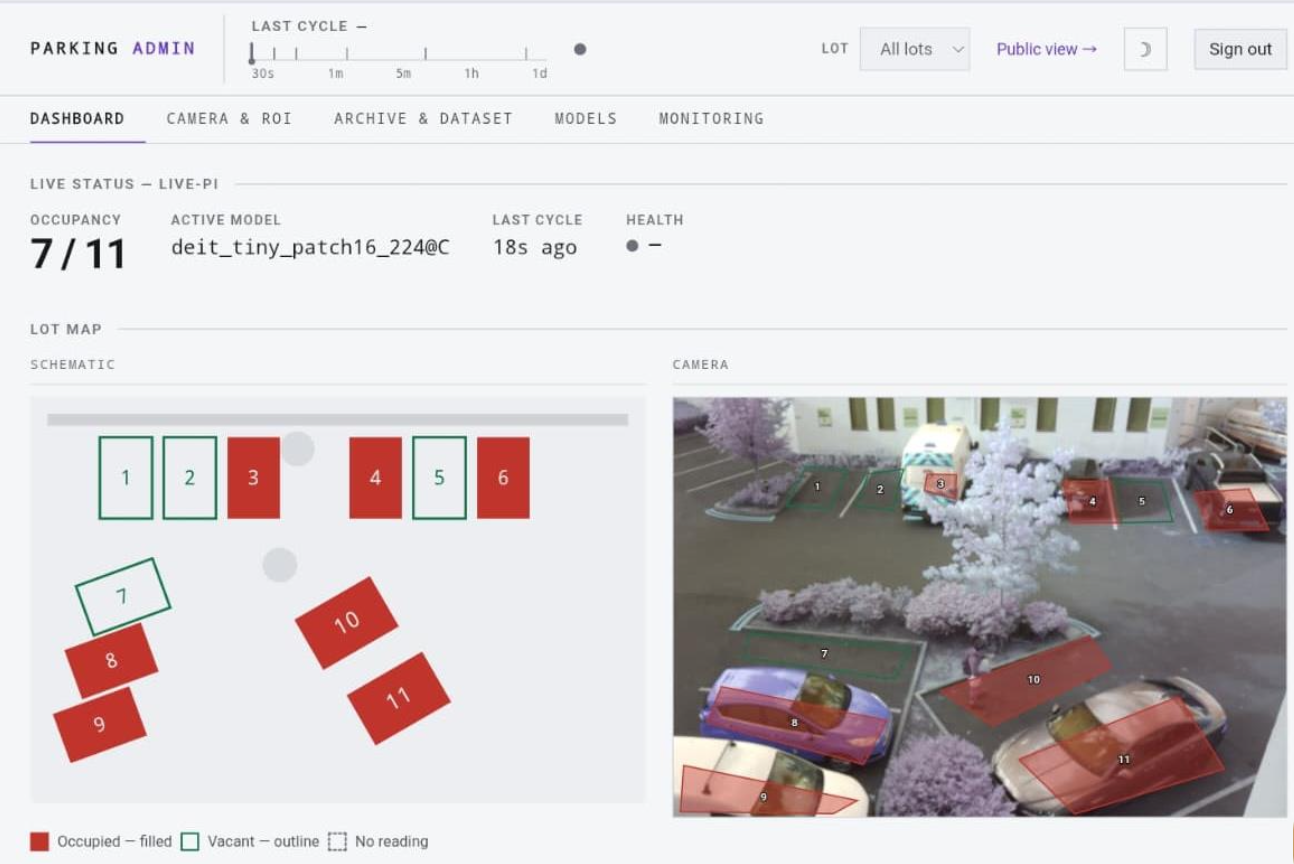
Operational dashboard linking model output, parking-space geometry and the live camera view.
Parking Occupancy Detection on Embedded Hardware: Accuracy, Efficiency, Transferability and Site Calibration
My MSc research examined parking occupancy detection across model families and datasets, with deployment on a Raspberry Pi 5. The work covered model development, evaluation, transferability and local calibration.
Classical machine learning, CNN/transformer models, object detection and vision-language models were explored. On-device deployment tested the practical relationship between accuracy and computational efficiency.
Performance on benchmark data did not reliably transfer to a new site. Local calibration and evaluation across daytime and night-time conditions were central to making the system useful in practice.
The operational design considered monitoring, retraining, performance-gated promotion and rollback. On-device inference and aggregate occupancy outputs support an approach focused on spaces, rather than identifying people.
Research project; this case study does not claim deployment as a Sabah government service. The linked project environments may require access.
Areas where I would like to contribute, combining an understanding of administration with practical data and AI skills.
Search circulars and working documents with source references and access controls that respect each officer’s permissions.
Permission-aware search · citationsUse licensing, process and workforce data to understand delays, track meaningful indicators and support better resource decisions.
Process analytics · workforce insightsExplore on-device AI for facilities and public assets, using aggregate insights and proportionate data collection.
Edge AI · privacy by designThese are proposals for exploration, subject to approval, data protection, risk assessment and human oversight.
I use Python and AI-assisted development tools, including Codex and Claude Code, for prototyping, automation, documentation and testing. Human review, data security and appropriate governance remain part of the work.
For professional conversations, research and ideas worth exploring.